When your furnace is blowing cold air, the blower is running but the burners are not producing heat. Start with the thermostat: make sure it is set to heat, the temperature is above the current room temperature, and the fan is set to auto rather than on. Next, check the air filter and make sure the outside exhaust vent is clear of snow and ice.
If the air still runs cold, the problem is likely inside the furnace, such as an ignition failure or a safety switch shutting the burners off… and it is time to call a Quicker Rooter furnace repair technician to help.
Start With the Thermostat
A thermostat setting is the easiest cause to rule out, so check it before anything else.
The Fan Is Set to On
Most thermostats let you set the fan to auto or on. On auto, the blower runs only while the furnace is heating. On on, it runs continuously, so between heating cycles it pushes room-temperature air through the vents, which feels cold coming out of a floor register. Switch it to auto and see whether the cold air stops.
The Thermostat Is Not Calling for Heat
Confirm the thermostat is set to heat and the temperature is set above the current room temperature. If it runs on batteries, a weak battery can cause erratic behaviour, and a blank or unresponsive display is a sign to replace them.
The Furnace Is Still Warming Up
A short burst of cooler air right after the furnace starts can be normal, since the blower may move air sitting in the ducts before warm air arrives. If the air never warms up after several minutes, look further.
Problems That Shut Off the Burners but Not the Fan
When a furnace detects a problem, its safety controls often shut off the burners while the blower keeps running to clear heat or air from the system. That is why cold air is such a common symptom.
A Clogged Air Filter
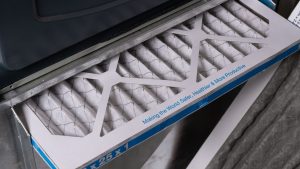
A dirty filter restricts airflow. Natural Resources Canada (NRCan) explains that reducing airflow too much can raise the air temperature inside the furnace too high. When that happens, a safety switch turns the burners off. NRCan advises cleaning or replacing the filter regularly.
Turn off the power to the furnace before opening the access panel to check it.
Ignition or Flame Sensor Trouble
Modern furnaces light the burners with an electronic ignitor, and a flame sensor confirms the flame is burning. A failed ignitor means the burners never light, while a dirty flame sensor shuts the gas off within seconds. Either way, the blower can end up moving unheated air.
Both are among the lower-cost furnace repairs, and both involve gas components that should only be serviced by a licensed technician.
A Blocked Exhaust Vent
High-efficiency furnaces vent through PVC pipes on the outside of the house. NRCan advises keeping the outside vent terminal clear of obstructions, including ice. When the vent is blocked, a pressure switch stops the furnace from firing.
After a snowfall or cold snap, check the vent and gently clear any buildup by hand.
A Clogged Condensate Drain
High-efficiency furnaces also produce water that drains away through a small line. If that line clogs or freezes, a safety switch can stop the burners from running, so look for water pooling around the base of the furnace.
When Only Some Rooms Get Cold Air
If most of the house is warm but a few rooms get cool air, the furnace may be working fine. Leaky or disconnected ducts, closed or blocked registers, and covered cold air returns can all keep warm air from reaching those rooms.
NRCan recommends removing obstructions from ducts, warm air registers, and cold air returns so air can move freely, and an annual tune-up can catch duct leaks and airflow problems.
Rule Out a Gas Supply Problem
A furnace cannot produce heat without gas. If other gas appliances have also stopped working, there may be an interruption in your gas service. The City of Calgary advises calling ATCO Gas and following its instructions before service is restored, and making sure appliances are working safely afterward.
If you smell gas, do not touch the furnace or any switches. The Canadian Gas Association advises leaving the home immediately and calling 911 or your gas utility from a safe location away from the house. Gas smells and odd odours are also among the signs it is time to call a furnace repair tech once the area is safe.
When Repair Becomes Replacement
Most furnaces last 15 to 20 years. A furnace past the 15-year mark that keeps needing repairs for cold air, ignition, or airflow problems may be ready for furnace replacement rather than another fix.
Get Your Warm Air Back With Quicker Rooter
Our Quicker Rooter licensed technicians repair all major furnace makes and models, and in most cases we can fix your furnace the same day. We are available 24/7, including weekends and holidays, provide a written estimate before work begins, and back every repair with a 1-year warranty on parts and labour.
Call us at (403) 294-1288 for a fast appointment!