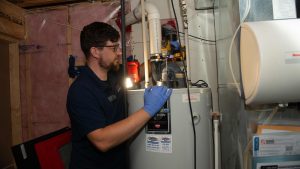
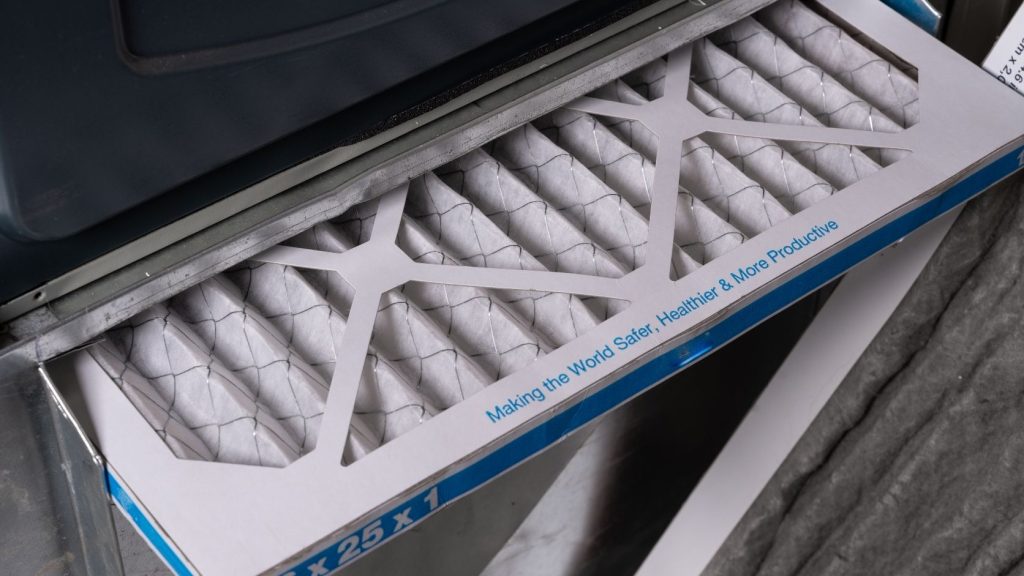
Canada Mortgage and Housing Corporation (CMHC) recommends checking and cleaning or replacing your furnace filter every month during the heating season.
Thicker media filters and washable filters are designed for different intervals, so follow the manufacturer’s guidance for your filter, and check more often if you have pets, renovation dust, or wildfire smoke.
A filter left too long restricts airflow, which makes the furnace work harder, raises your heating bills, and can overheat the furnace to the point of a safety shutdown and a call for furnace repair tech in and around Calgary.
How Often to Check and Change Your Furnace Filter
CMHC’s home maintenance schedule pairs a monthly filter check with cleaning or replacing the filter during the heating season. Thin disposable filters fill up quickly, while thicker media filters and washable filters are built for different intervals, so the monthly check tells you whether yours is due and the manufacturer’s guidance tells you how long it should last.
Signs It Is Time
A filter is due when it looks grey or caked with dust, when you can no longer see light through it, or when dust is building up on vents and furniture faster than usual. Weaker airflow from the registers is another clue.
When to Check More Often
Pets, smokers in the home, renovation work, and wildfire smoke all load a filter faster. A filter that has been running since September has captured a full heating season of dust by spring, and leaving it in place through the summer keeps restricting airflow when the furnace starts up again in the fall.
What Happens if You Do Not Change It
A furnace is designed to move a specific amount of air. A clogged filter cuts that airflow, and the effects build from there.
Overheating and Safety Shutdowns
Natural Resources Canada (NRCan) explains that reducing airflow too much can raise the air temperature inside the furnace too high. When that happens, a safety switch shuts the burners off, which can leave the furnace turning on and off repeatedly or blowing cool air.
Furniture or rugs over cold air returns make the problem worse, and NRCan recommends keeping ducts, registers, and returns clear so air can move freely.
Higher Heating Bills
With less air moving through it, the furnace has to run longer to heat your home. That extra run time shows up on your gas bill, and heating bills that climb without any change in usage are one of the signs to call a furnace repairman.
More Dust and Extra Wear
A filter that is full can no longer trap new dust, so more of it circulates through your home and settles inside the furnace. The blower motor also has to work harder against the restriction, which adds wear over time.
Choosing the Right Filter
Furnace filters are commonly rated by MERV, or Minimum Efficiency Reporting Value, and a higher MERV number means the filter captures finer particles. During wildfire smoke, the Intact Centre on Climate Adaptation recommends a high-efficiency filter, such as MERV 13 or higher, if it is compatible with your system.
A filter that is too restrictive for your furnace can cause the same airflow problems as a dirty one, so check with a technician before moving to a higher rating. The same guidance suggests setting the furnace fan to on during smoke events so the filter cleans indoor air continuously. Running the fan constantly sends more air through the filter, so check it more often while the smoke lasts.
How to Change a Furnace Filter
Changing a standard filter takes a few minutes:
- Turn off the power to the furnace before opening the access panel, as NRCan advises.
- Slide out the old filter and note the size printed on its frame.
- Insert the new filter with the airflow arrow pointing toward the furnace.
- Close the panel, restore power, and write the date on the filter frame.
Your Filter, Humidifier Pad, and HRV Are Not the Same
A furnace filter is only one part of keeping air moving cleanly. A whole-home humidifier pad collects mineral deposits from Calgary’s hard water over a heating season, so replacing or at least inspecting the pad after the heating season belongs on every spring plumbing and heating checklist.
If your home has a heat recovery ventilator (HRV), CMHC recommends checking its filters every two months.
Keep Your Furnace Breathing Easy With Quicker Rooter
Our licensed technicians recommend an annual furnace tune-up, ideally in late summer or early fall, to catch airflow and duct problems before the heating season starts.
We repair all major furnace makes and models 24/7, provide a written estimate before work begins, and back every repair with a 1-year warranty on parts and labour. Call (403) 294-1288 or book online now.